Three things are about to intertwine, and I’m fearing the worst:
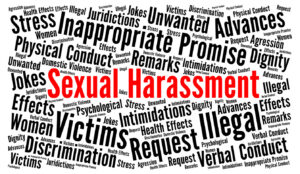
- The recent update to the sexual harassment laws, which puts the onus on you as the employer to take ALL reasonable steps to prevent it;
- The addition of sexual harassment claims to whistleblowing legislation;
- The new law that makes employers liable for third-party harassment of any kind.
In English? Sexual harassment is getting wiped off the map, and if you’re seen to be aiding or abetting its continued survival, you’ll regret it.
These changes are far-reaching for all businesses, but particularly if you’re in hospitality and/or customer-facing.
And in the golf club world, they have serious ramifications.
Because for 20+ years now, I’ve seen how members act. How they feel that because it’s “their” club, they can do and say whatever they want.
The result is too often behaviour they wouldn’t dream of exhibiting at the pub, at Nandos, in the Waitrose cafe, because they know they’d get thrown out.
But in the golf club, they feel safe. Because it’s “different”. Because it’s “theirs”.
Yes, in theory, each club is supposed to have a member disciplinary policy, which prevents and punishes poor behaviour.
But in practice, applying that policy to “Bob”, who is a past captain, member for 33 years, and always buys a round for everyone when he is in, is fraught with complications.
No one wants to be the one who decided to ban him from the clubhouse for 6 months for patting young female staff on the bottom (he doesn’t try it on with anyone over 30).
“He didn’t mean anything by it, it is so difficult for people (men) to know what they can and can’t do nowadays, we’ll just have a quiet word.”
So Bob just keeps doing things that he shouldn’t. Recognise Bob in your club?
The triple-pronged change this year is this: let this behaviour slide and now the club can be sued for not dealing with it correctly, potentially costing tens of thousands of pounds in legal fees and fines.
I was giving a talk last week, and came across the familiar objection to these changes:
“How can we possibly know what the members are going to do? There is no way we can stop them from doing anything they want! And there are too many of them for us to even try!”
If you were planning to try that one too, I’ve got bad news – unfortunately, that is not a defence.
It will be the law, there will be court cases, legal fees and huge fines if you have done NOTHING to try and either prevent incidents or to punish them when they happen, setting a standard for your remaining members.
So I thought it best just to drop you some information to help you navigate it as best you can.
So here’s our starter for 10:
- Make sure all staff, board members and officers of the club have completed online sexual harassment training.
This can be completed on any device, takes about an hour, and makes it clear what the law feels about sexual harassment, not that of the media.
No one should be allowed to be at a board-level or senior management position without completing this training. Saying “I know what I am doing” does not cut it – complete the training and prove it.
We have a recommended provider – please email us, and we can send you the details.
- Complete a risk assessment about the likelihood of sexual harassment in the workplace, and what can be done to mitigate them. Just like you would with any area under Health & Safety legislation. You wouldn’t let greenkeepers use a strimmer without steel-tipped boots, why would you expect 18-year-old females to be able to deal with “Bob” by themselves?
- Complete anti-harassment bystander training, for free here – https://www.suzylamplugh.org/Pages/Events/Category/events
- Improve your knowledge of what constitutes sexual harassment. The BBC has an insightful drama that I highly recommend watching: https://www.bbc.co.uk/iplayer/episode/p06x0jv5/is-this-sexual-harassment
- Implement a zero-tolerance policy for staff and members, and put up signs to make sure everyone is aware. This also applies to societies, which can be banned for bad behaviour much more easily than the members.
Do all of the above, and should the worst happen, you can feel much more confident that you’ve done all you can and that you’re in a stronger position to deal with any issues that come up. You will also mitigate the amount of any awards against you in court.
And if the above demonstrates you’ve got gaps that need filling in, hit reply and we’ll do what we can to help.